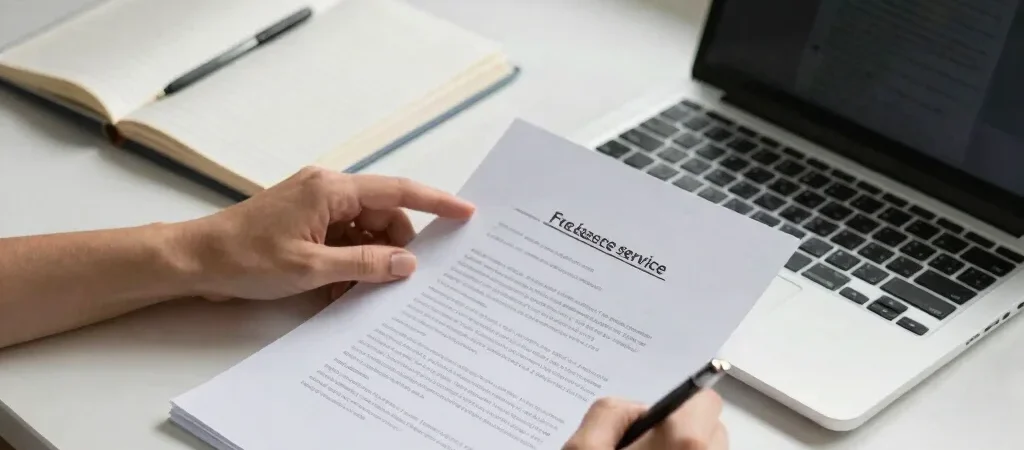
A first freelance offer doesn’t need a polished brand or a long list of services. It needs to explain one useful task, who it helps, and what the client receives. That makes it easier to judge whether the work fits your skills and schedule before you invest in a website, course, or paid software.
Make the offer concrete
Replace a broad label like “marketing help” with a defined outcome, such as editing a short email sequence or formatting a set of presentation slides. A specific offer helps both sides discuss scope: what files you need, how many revisions are included, and when the work is due. Keep the first version small enough to describe in a few sentences.
Count the work around the work
The deliverable is only part of the time commitment. Finding prospects, writing proposals, answering questions, and handling revisions all take time too. Before setting a rate, estimate those tasks alongside the actual production work; otherwise, a project that looks manageable on paper can crowd out the rest of your week.
Test before buying tools
Start with tools you already have where practical, then note what slows the work down. A paid design app or scheduling service may be useful once a real project calls for it, but buying a stack of subscriptions before you have a defined service adds cost without answering the central question: can you find people who need this work? Treat the first few conversations as research, not proof of future income.
Keep the first test small
Write a short description of the service, the information you need from a client, and the limits of the project. Share it with a few relevant contacts or use it to guide your outreach, then track the questions people ask. If the offer is hard to explain or repeatedly attracts the wrong requests, revise the scope before spending more time or money.

